
Sustainable post practices in a 100% renewable city

Video post‑production doesn’t look “dirty” in the way a film set full of trucks and generators does, but it still has a real environmental footprint. Every server, export, upload and delivery uses energy and storage, and that adds up across campaigns, films and comms products. At SilverSun in Canberra, we’re lucky to work in a city where the electricity supply is matched with 100% renewable generation, and we’ve built our post workflows to make the most of that – cutting waste while keeping the craft front and centre.
For our clients, sustainable post isn’t about sacrificing quality. It’s about smarter planning: less duplication, fewer dead‑end versions and storage that doesn’t have to stay online forever. That means tighter turnarounds, simpler reviews and a smaller footprint baked into the way we already work.
Why post production has a footprint
A lot of a project’s impact now happens long after the cameras stop rolling. In post, we move rushes and masters around between drives and the cloud, keep high‑resolution media online, and run multiple machines to render, export and review. Every extra copy, export or “just in case” file is more data to power, cool and back up.
At the same time, organisations are increasingly being asked to show how suppliers support their sustainability and ESG goals. Government, education and corporate teams in particular are looking at travel, energy use and waste right through their supply chain, including video production and post. That’s where Canberra’s position helps: the ACT’s electricity consumption is matched by contracts for 100% renewable wind and solar, so the power running our edit and audio rooms already carries a lower emissions profile than a typical grid.
How we approach sustainable post at SilverSun
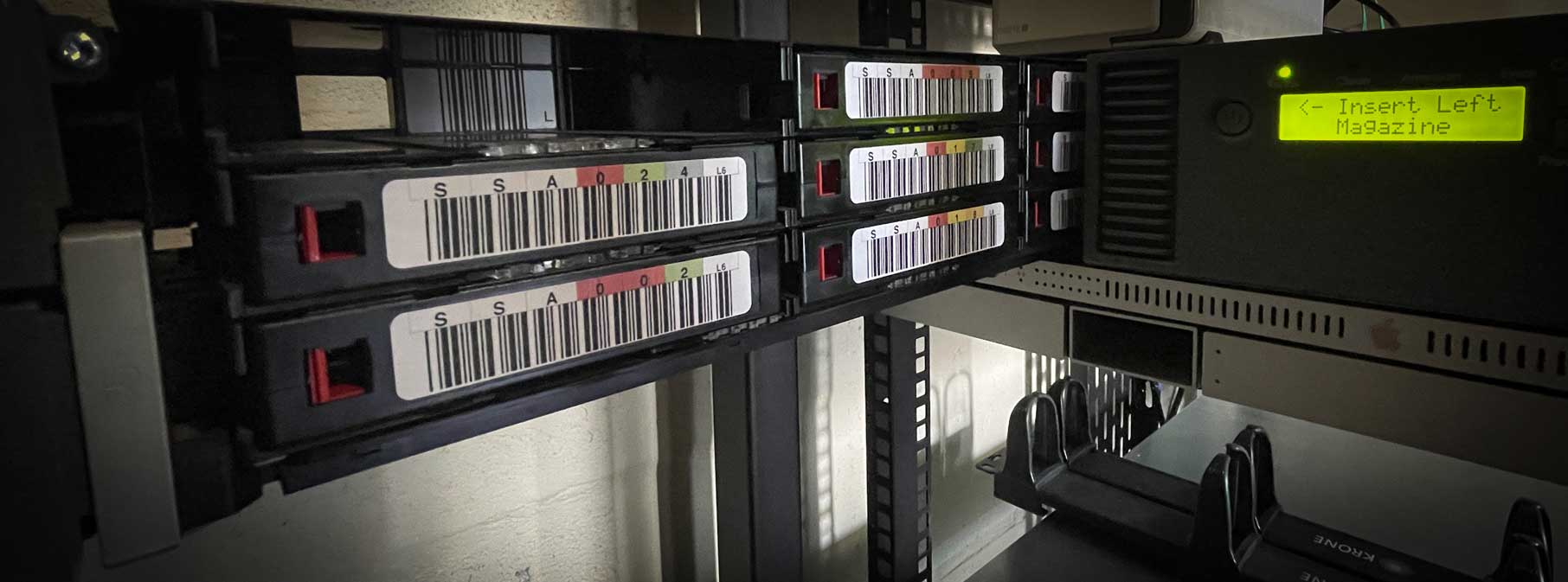
Our starting point is simple: run a tight, modern post workflow, and the sustainability gains will follow. For us, that begins with media management. We commit rushes to LTO tape straight away instead of leaving huge volumes of camera originals spinning on online storage, and final masters and project media are archived to LTO no later than about a month after completion. Tape remains one of the most energy‑efficient ways to store large archives for the long term, using far less power than keeping everything on always‑on disks or cloud volumes.
We use dedicated archiving software to manage those archives, which means bringing a project back online for re‑versioning is quick and predictable rather than a painful archaeology exercise. That balance matters: it’s no use having “green” storage if it makes it harder or slower to deliver new edits when you need them. Our approach is to keep active projects lean but accessible, then move them to efficient tape once the heavy lifting is done.
Day to day, we also try to prioritise digital-only workflows. Review and approval is handled through online links rather than printed scripts or in‑person screenings where someone has to jump in the car and drive across town. Transfers and deliveries are almost entirely digital, so masters and versioned files arrive as secure downloads instead of drives or DVDs travelling around in vehicles. Inside the suite, we plan feedback rounds so we’re not churning out ten near‑identical masters when two well‑timed exports will do, and we standardise common deliverables so that every project doesn’t have to reinvent the wheel.
What this means for our clients
All of this shows up in practical ways for the organisations we work with. Streamlined review cycles and fewer redundant exports mean less time wasted for internal teams who are already busy, and a clearer sense of where each project is up to. Leaner storage and planned archiving reduce long‑term costs while still giving you confidence that footage and masters are safe if you need to revisit them in six months or two years.
There’s also a story you can tell internally. Many corporate, education and government clients now report against sustainability or ESG criteria, and vendor selection is part of that. Being able to say your video content is finished in a jurisdiction powered by 100% renewable electricity, using workflows that minimise unnecessary energy use, travel and waste, makes it easier to justify your media spend to sustainability leads and executive teams.
For internal comms, recruitment pieces, onboarding content and campaigns, that alignment matters. You’re not just talking about your values on screen; the way the work is made reflects them too.
Where sustainable post is heading
Sustainable post is an evolving space. Industry bodies and initiatives are publishing more detailed guidance on greener practices in post, VFX and finishing, from smarter storage strategies through to greener data centre choices. Remote and asynchronous collaboration tools continue to improve, making it easier to keep client teams out of cars and planes while still staying closely involved in the creative process. On the technology side, more efficient codecs, hardware and cloud options are helping reduce the energy required per project without compromising quality.
At SilverSun, our aim is to keep adapting how we work so you don’t have to choose between sharp storytelling, sensible budgets and a smaller footprint. If your next campaign, training series or internal project has sustainability targets attached, we’re happy to factor that into how we plan the edit and post schedule from day one – so your content and your climate goals are pulling in the same direction.